
For seniors with Alzheimer’s disease who wish to age in place, proper lighting can be the difference between confusion and clarity, between restless nights and peaceful sleep. As cognitive abilities change, the brain’s ability to process visual information becomes compromised, making thoughtful lighting design an essential component of safe, comfortable Alzheimer’s home care.
Understanding How Light Affects Sundowning
Sundowning affects up to 80% of people with dementia, causing increased agitation, confusion, and anxiety as daylight fades. This phenomenon occurs partly because Alzheimer’s disrupts the brain’s internal clock, making it harder to distinguish between day and night. Strategic lighting can help regulate these disrupted circadian rhythms and reduce evening distress.
Essential Lighting Modifications for Alzheimer’s Home Care
While no two seniors diagnosed with Alzheimer’s are the same, the following modifications may help reduce the confusion and agitation related to sundowning:
Increase Overall Brightness
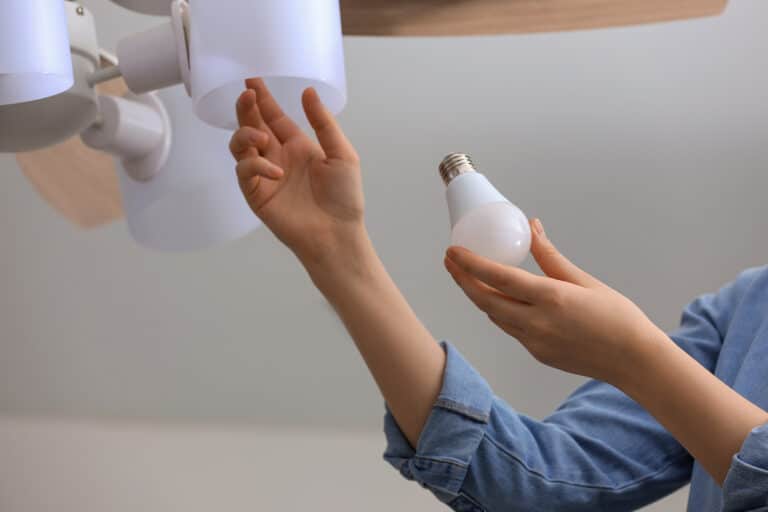
Seniors with Alzheimer’s need significantly more light than healthy adults to see clearly. When modifying the lighting in the living space, it’s a good idea to increase the lighting so that it is equivalent to a bright office environment. This can be accomplished by replacing standard bulbs with higher-wattage LEDs or adding additional fixtures to eliminate dim corners where shadows might be mistaken for people or objects.
Install Motion-Activated Night Lights
Nighttime wandering becomes safer with motion-sensor lights along hallways, bathrooms, and bedrooms. Choose warm, soft lighting that provides visibility without being jarring. This prevents dangerous falls while helping a loved one navigate familiar spaces independently.
Use Light Therapy Boxes
Morning exposure to bright light therapy boxes for 30-60 minutes can help reset disrupted sleep cycles. Position the light box at eye level during breakfast or morning activities to maximize effectiveness without requiring schedule changes.
Eliminate Harsh Contrasts
Sharp transitions between bright and dark areas can create confusion and fear. Use dimmer switches to gradually adjust lighting throughout the day and ensure even light distribution across rooms. Avoid decorative lighting that creates moving shadows or patterns.
Supporting Aging in Place Through Professional Care
While environmental modifications like proper lighting are crucial, comprehensive Alzheimer’s home care often requires professional support to make aging in place successful and safe. Trained caregivers understand how lighting affects behavior and can implement these strategies consistently.
Professional Alzheimer’s home care providers can monitor how lighting changes impact mood and sleep patterns, adjusting approaches as the disease progresses. They’re also trained to recognize when sundowning behaviors escalate beyond what environmental modifications can address, ensuring safety while maintaining the comfort of home.
Alzheimer’s home care services can establish consistent daily routines that work with natural light cycles—opening curtains at sunrise, engaging in bright-light activities during the day, and dimming lights gradually in the evening. This consistency helps reinforce the body’s natural rhythms.
Aging in place with Alzheimer’s becomes more achievable when families combine thoughtful environmental design with professional Alzheimer’s home care support. Proper lighting reduces anxiety, improves safety, and helps maintain precious independence while ensuring loved ones receive the specialized attention they need to thrive at home.
If you or an aging loved one is considering Alzheimer’s Home Care in Takoma Park, MD, please contact the caring staff at A+ Personal Home Care. Call (443) 660-8757, After Hours: (443) 796-5241
A+ Personal Home Care is a Trusted Home Care Agency serving Baltimore and the DC Metro Area, with offices in Pikesville and Gaithersburg.
Sources:
- https://www.caregivercloud.com/article.aspx?articleid=94
- https://www.alzheimers.org.uk/about-dementia/treatments/alternative-therapies/light-therapy-and-dementia
- https://pmc.ncbi.nlm.nih.gov/articles/PMC3553247/
- https://www.alzheimers.gov/life-with-dementia/tips-caregivers

At A+ Personal Home Care, our mission has always been to provide exceptional care, compassion, and a nurturing environment for our beloved community members. Over the years, we have strived to create a place where individuals can find solace, engage in meaningful activities, and receive the highest quality of medical attention.
A+ Personal Home Care is always striving to improve and exceed expectations. We welcome feedback and suggestions from our clients and their families, as your input is invaluable in shaping the future of our care programs. We want to ensure that we continue to meet your needs and remain a trusted pillar of support within our community.
I would like to extend my deepest gratitude to all the families who have placed their trust in us. Your support and loyalty inspire us to continue providing exceptional care every day. We are committed to fostering an atmosphere of love, respect, and dignity, and we consider it an honor to serve you and your loved ones.
Should you have any questions, concerns, or ideas, please do not hesitate to reach out to me or any member of our dedicated team. We are here to listen, assist, and ensure that your experience at A+ Personal Home Care remains fulfilling and positive.
Thank you once again for choosing A+ Personal Home Care as your partner in care. We look forward to sharing many more moments of joy, growth, and healing with you and your loved ones in the days to come.
- How Senior Home Care Supports Aging in Place with Parkinson’s - September 23, 2026
- A Plus Personal Home Care: Helping Families Navigate Home Care in Baltimore and the DC Metro Area - September 22, 2026
- Empowering Seniors Regarding Medication Management - September 11, 2026