
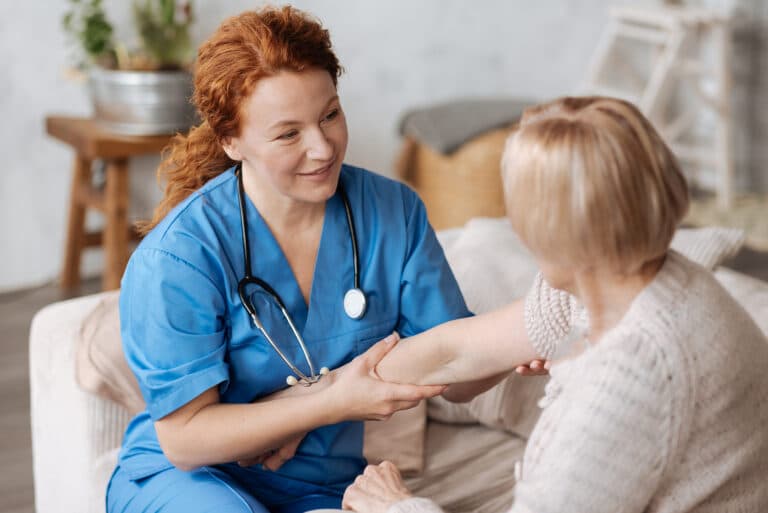
When a parent’s doctor recommends nursing visits at home, many families aren’t sure what to expect. Will a nurse come every day? What will they actually do? How does it fit with the rest of your parent’s routine? Skilled nursing care brings licensed nurses into the home to provide medical care that a family member or non-medical caregiver can’t. Understanding how it works can help your family feel prepared and make the most of every visit.
Who Provides Skilled Nursing Care
Skilled nursing care is provided by registered nurses and licensed practical nurses who follow a plan of care created with your parent’s doctor. The registered nurse typically leads the plan, assesses your parent’s health, and decides what each visit should focus on. Licensed practical nurses may also provide care under that plan.
These nurses are trained to recognize subtle changes in health, perform clinical tasks safely, and teach patients and families how to manage conditions at home. They also communicate regularly with your parent’s doctor, so the medical team stays informed between office appointments.
Common Reasons for Nursing Visits
Doctors order nursing care at home for many reasons. Some of the most common include:
- Recovery after surgery or a recent illness
- Care for surgical wounds or slow-healing skin injuries
- New or changed medications that need monitoring
- Managing chronic conditions such as heart failure, COPD, or diabetes
- Monitoring vital signs and symptoms after a change in health
- Teaching about new medical equipment or treatments
Each skilled nursing care plan is tailored to the individual, so your parent’s visits will reflect their specific health needs and goals.
What Happens during Each Visit
A typical nursing visit begins with a check of your parent’s overall condition. The nurse may take blood pressure, pulse, temperature, and oxygen levels, ask about pain and appetite, and review how your parent has been feeling since the last visit.
From there, the nurse focuses on the goals in the care plan. That might mean caring for a wound, reviewing medications, checking blood sugar records, listening to the lungs, or teaching your parent how to recognize warning signs. Before leaving, the nurse often updates notes, answers questions, and lets your family know what to watch for until the next visit.
Visits are usually scheduled for specific days and last as long as needed to complete the planned care. The schedule may change as your parent’s needs change.
Teaching Is Part of Every Visit
One of the most valuable parts of skilled nursing care at home is education. Nurses don’t just provide care; they help your parent and family understand it. They may explain what a new medication does, show how to use a blood pressure cuff, or describe which symptoms should prompt a call to the doctor.
When seniors understand their health, they tend to feel more confident and in control. Families also benefit because they know how to support their loved one between visits.
Benefits of Receiving Care at Home
Receiving skilled nursing care at home offers real advantages. Your parent can rest in familiar surroundings, keep their daily routine, and avoid the strain of traveling to appointments while recovering. Nurses also see how your parent actually lives, which helps them spot hazards, notice how medications are stored, and give advice that fits real life.
Many seniors feel more relaxed at home, which makes it easier to talk openly with the nurse about how they’re really doing. A parent who might downplay symptoms in a busy office often shares more over a cup of coffee at the kitchen table.
How Skilled Nursing Care Visits Fit with Daily Care
Skilled nursing care visits are focused on specific medical tasks and usually don’t last all day. Many seniors also benefit from non-medical caregivers who help with bathing, meals, housekeeping, and companionship during the hours between visits. When nurses and caregivers share information, your parent receives more consistent support.
For example, a caregiver might notice that your mother ate very little at lunch or seemed more short of breath than usual. Sharing that with the nurse can help the care team respond quickly.
Preparing for Your Parent’s First Visit
A little preparation can help the first visit go smoothly. Gather your parent’s medications, including vitamins and over-the-counter products, in one place. Have a list of doctors, recent hospital or office visits, and any discharge instructions. Write down questions as they come up, so nothing is forgotten when the nurse arrives.
If possible, have a family member present for the first visit. Hearing the plan firsthand makes it easier to support your parent afterward.
Getting Started
If your parent’s doctor has mentioned nursing visits at home, ask what the goals of care will be and how often visits are expected. Then reach out to an agency to learn how they coordinate nursing with daily support. With the right plan, skilled nursing care can help your parent stay comfortable, informed, and on track with their health in the place they feel most at home.
If you or an aging loved one are considering Skilled Nursing Care in Dundalk, MD, please contact the caring staff at A+ Personal Home Care. Call (443) 660-8757, After Hours: (443) 796-5241
A+ Personal Home Care is a Trusted Home Care Agency serving Baltimore and DC Metro Area, with offices in Pikesville and Gaithersburg.

At A+ Personal Home Care, our mission has always been to provide exceptional care, compassion, and a nurturing environment for our beloved community members. Over the years, we have strived to create a place where individuals can find solace, engage in meaningful activities, and receive the highest quality of medical attention.
A+ Personal Home Care is always striving to improve and exceed expectations. We welcome feedback and suggestions from our clients and their families, as your input is invaluable in shaping the future of our care programs. We want to ensure that we continue to meet your needs and remain a trusted pillar of support within our community.
I would like to extend my deepest gratitude to all the families who have placed their trust in us. Your support and loyalty inspire us to continue providing exceptional care every day. We are committed to fostering an atmosphere of love, respect, and dignity, and we consider it an honor to serve you and your loved ones.
Should you have any questions, concerns, or ideas, please do not hesitate to reach out to me or any member of our dedicated team. We are here to listen, assist, and ensure that your experience at A+ Personal Home Care remains fulfilling and positive.
Thank you once again for choosing A+ Personal Home Care as your partner in care. We look forward to sharing many more moments of joy, growth, and healing with you and your loved ones in the days to come.
- Signs of Caregiver Burnout: How to Spot It Early, Before It Takes Over - November 9, 2026
- What Skilled Nursing Care at Home Looks Like - November 9, 2026
- Why Mealtimes Can Become a Challenge During the First Weeks Home From the Hospital - October 26, 2026